
EP3253144B1 Claim 1 vs 3GPP TS 36.300: Sample Claim Chart
The content of a report SEPPi generated, shown as delivered. Reports are written in English.
Bibliographic data
- Patent number
- EP3253144B1
- Title
- Pucch methods and apparatuses of enhanced ca in ue and base station
- Inventors
- Xiaobo Zhang
- Priority date
- 2015-01-27
- Filing date
- 2015-12-28
- Assignee
- Sisvel International SA
- Standard assessed
- LTE (E-UTRA) scheduling request procedure with PUCCH on a secondary cell — TS 36.321 §5.4.4, TS 36.213 §10.1.5 — Any 3GPP Rel-13 compliant UE
- Target release
- Rel-13 (TS 36.300 v13.14.0, TS 36.213 v13.16.0, TS 36.331 v13.17.0, TS 36.321 v13.9.0, TS 36.212 v13.11.0)
Claim 1 (independent)
An enhanced Carrier Aggregation, CA, Physical Uplink Control Channel, PUCCH, method in a User Equipment, UE, comprising: Step A: receiving a first high layer signaling (S21), wherein the first high layer signaling indicates a reserved Scheduling Request, SR, resource on a first serving cell; Step B: determining, by the UE and among a plurality of candidate serving cells, a target serving cell for transmitting SR indication information on a first sub frame (S22); Step C: transmitting the SR indication information on the first sub frame of the determined target serving cell (S23); said method being characterized in that the UE is configured with PUCCH of a target format on other serving cells except for the first serving cell in said plurality of candidate serving cells; wherein said target format simultaneously transmits SR indication information and PUCCH format of Hybrid Automatic Repeat Request, HARQ, Acknowledgement, ACK, the first serving cell is one of the plurality of candidate serving cells, the reserved SR resource is PUCCH resource, and the SR indication information indicates a positive SR or a negative SR.
Standard under assessment
Rel-13 · TS 36.300 v13.14.0 · TS 36.213 v13.16.0 · TS 36.331 v13.17.0 · TS 36.321 v13.9.0 · TS 36.212 v13.11.0
Primary target: 3GPP LTE (E-UTRA), Release 13 — the scheduling request procedure of TS 36.321 v13.9.0 §5.4.4, with the PUCCH procedures of TS 36.213 v13.16.0 (§10, §10.1.1, §10.1.5), the multiplexing of the scheduling request bit with HARQ-ACK in TS 36.212 v13.11.0 §5.2.3.1, the carrier-aggregation description in TS 36.300 v13.14.0 (§5.2.3, §7.5) and the RRC configuration in TS 36.331 v13.17.0 (§5.3.10.6, §6.3.2).
Release 13 is the release in which the claimed arrangement enters the standard. In the Rel-12 text of TS 36.300 §5.2.3 the PUCCH is transmitted on the primary cell only in carrier aggregation, while the Rel-13 text adds the PUCCH SCell; the Rel-12 text of TS 36.321 §5.4.4 has no valid-resource note for several scheduling request resources, and the Rel-12 text of TS 36.331 has no scheduling request configuration for a secondary cell. The LTE family is charted because the NR counterpart of the scheduling request procedure appears only from Rel-15.
The claim is mapped along one procedure path: the scheduling request procedure for a UE that has more than one valid PUCCH resource for SR in one TTI because a PUCCH SCell is configured (TS 36.321 §5.4.4, "The selection of which valid PUCCH resource for SR to signal SR on when the MAC entity has more than one valid PUCCH resource for SR in one TTI is left to UE implementation"). The wording of some cited clauses differs in the latest release (Rel-19), so this chart holds for Rel-13 only.
Claim chart
Matching colors mark corresponding elements between the claim and the standard. An underline in a screenshot marks the text the mapping rests on.
An enhanced Carrier Aggregation, CA, Physical Uplink Control Channel, PUCCH, method in a User Equipment, UE, comprising:
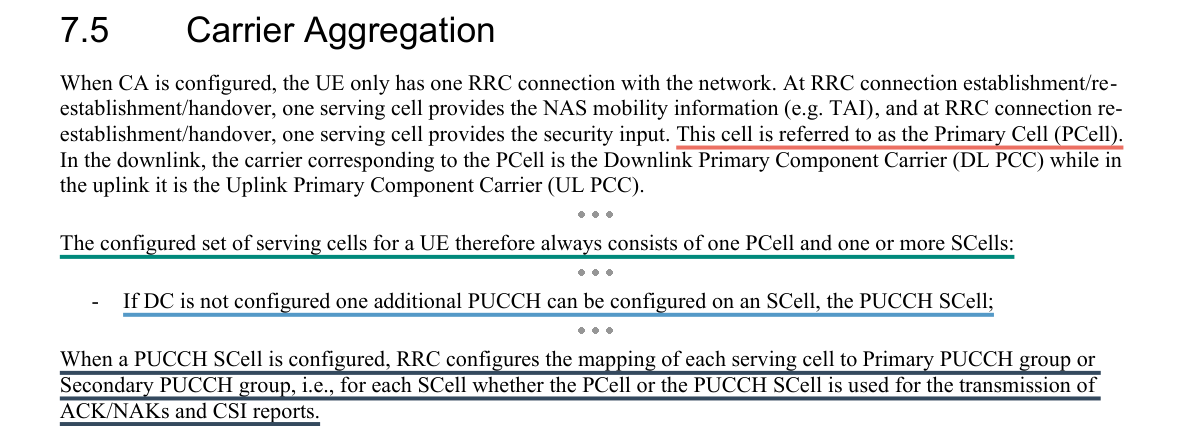
Context: the claim sits in LTE carrier aggregation in which the PUCCH is transmitted on more than one serving cell. When a PUCCH SCell is configured, RRC maps each serving cell to a primary or a secondary PUCCH group, and the UE applies the PUCCH procedures to both groups.



receiving a first high layer signaling (S21),
The UE receives the signaling that carries the scheduling request configuration: the SchedulingRequestConfig IE "is used to specify the Scheduling Request related parameters", and the UE reconfigures its physical channel configuration in accordance with the received physicalConfigDedicated.

wherein the first high layer signaling indicates a reserved Scheduling Request, SR, resource on a first serving cell;
The same SchedulingRequestConfig IE indicates the reserved resource: PUCCH resources for SR are assigned through RRC signalling and are given by the sr-PUCCH-ResourceIndex parameter of the IE, which E-UTRAN configures. The cell is read as the PCell, on which PUCCH is transmitted (narrow reading: the resource may equally sit on the PUCCH SCell, which has its own scheduling request configuration).

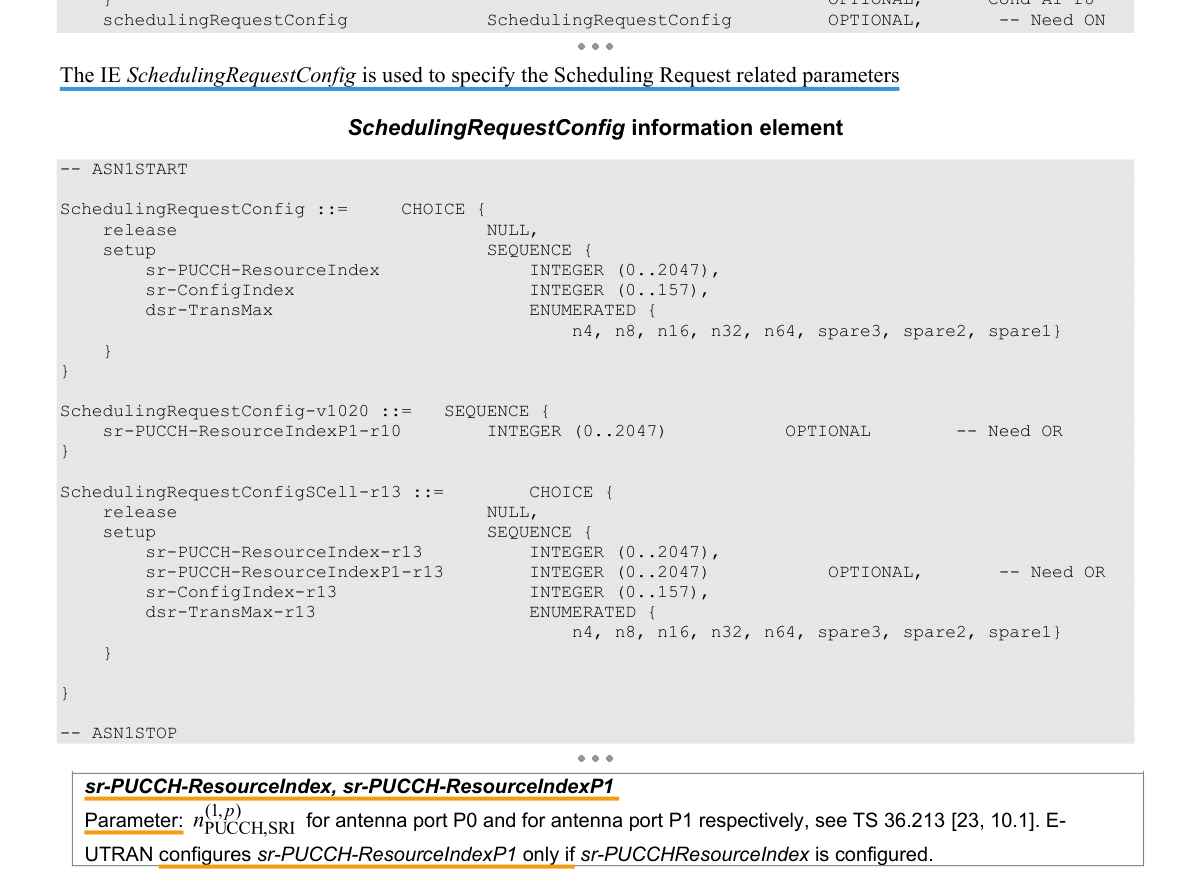
determining, by the UE and among a plurality of candidate serving cells, a target serving cell for transmitting SR indication information on a first sub frame (S22);
When the MAC entity has more than one valid PUCCH resource for SR in one TTI, the selection of which one the SR is signalled on is left to UE implementation, so the UE performs the determination. The candidates are the cells of the configured set of serving cells (narrow reading: only cells holding a valid SR resource, the PCell and the PUCCH SCell, can carry the SR). The selected cell is the serving cell to which the chosen uplink resource belongs, the SR goes out as the scheduling request bit, and the valid resource is configured for a TTI. Optional: this holds when the UE is configured with a PUCCH SCell.


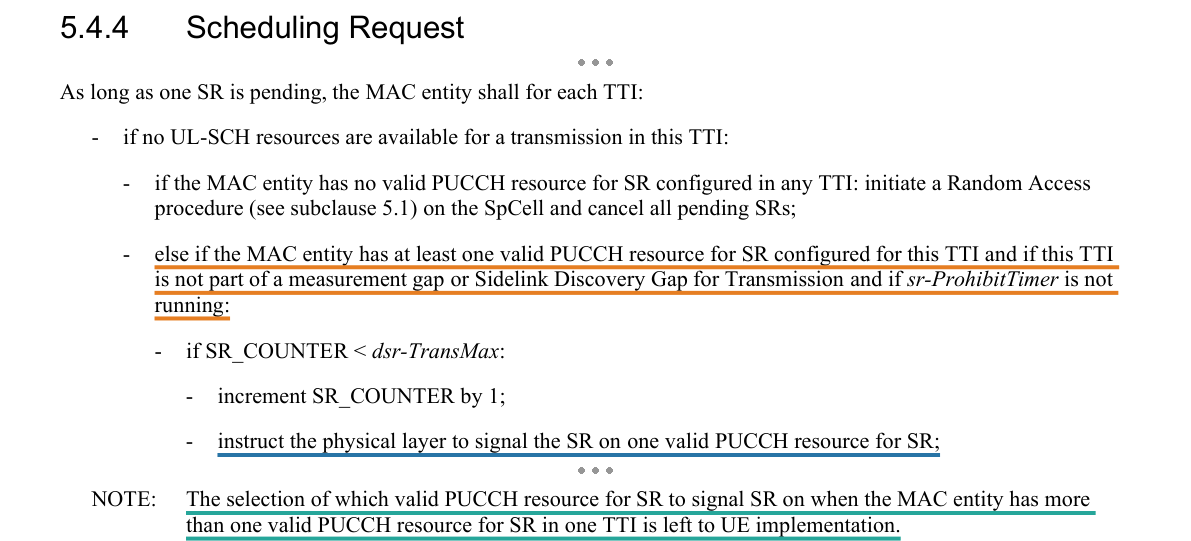
transmitting the SR indication information on the first sub frame of the determined target serving cell (S23);
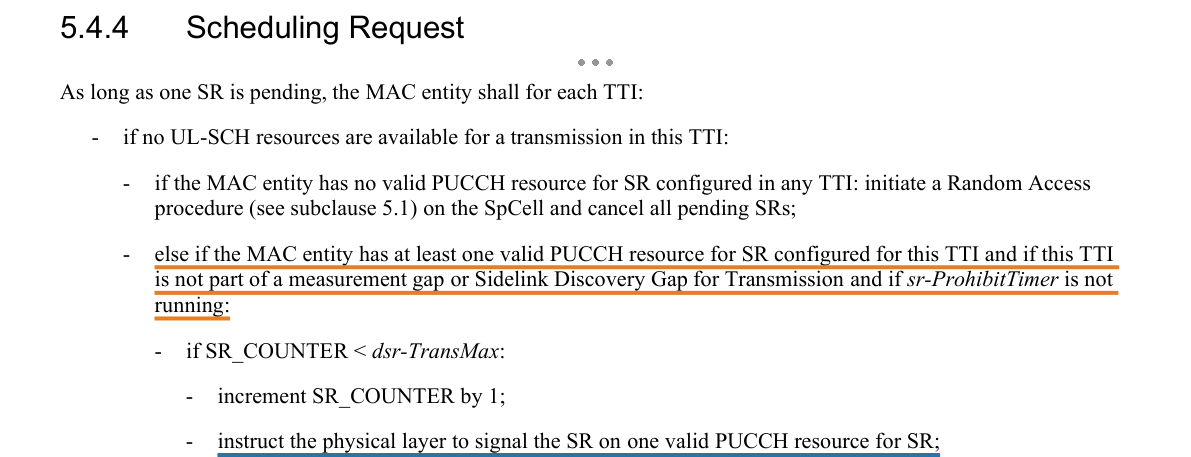
The MAC entity instructs the physical layer to signal the SR on one valid PUCCH resource for SR: the scheduling request bit is sent in the TTI for which that resource is configured, on the serving cell to which the selected uplink resource belongs.

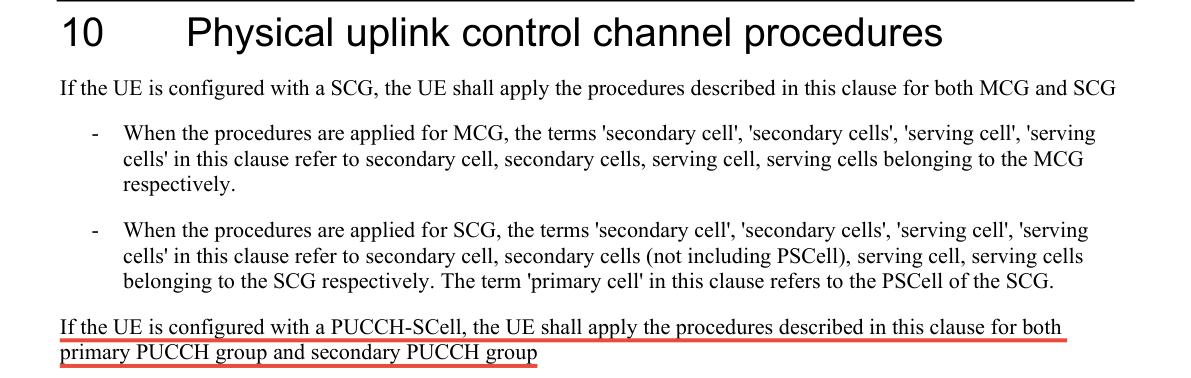
said method being characterized in that the UE is configured with PUCCH of a target format on other serving cells except for the first serving cell in said plurality of candidate serving cells;
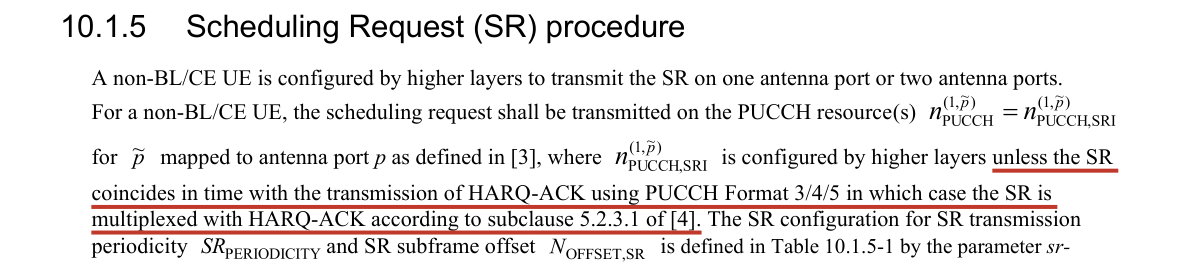
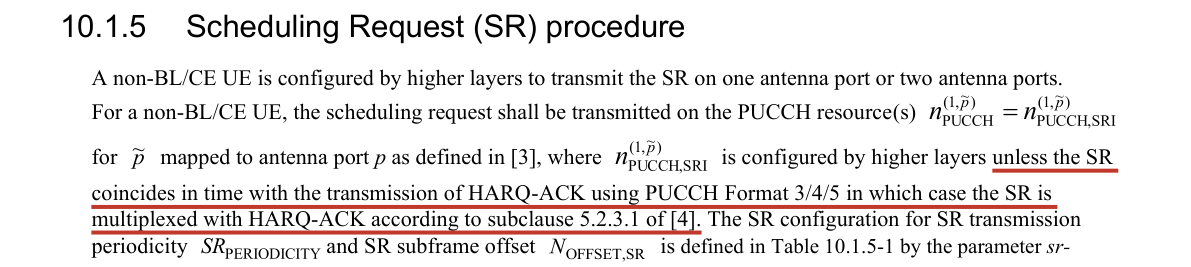
A UE configured with a PUCCH-SCell applies the PUCCH procedures to both the primary and the secondary PUCCH group, and SR coinciding with HARQ-ACK is multiplexed on PUCCH Format 3/4/5. The other cell is the PUCCH SCell ("one additional PUCCH can be configured on an SCell"), the first cell is the PCell, and both belong to the configured set of serving cells. Narrow readings: the claim says plural "other serving cells" while one PUCCH SCell is allowed without dual connectivity, and the standard binds the formats to the PUCCH SCell only through "apply the procedures described in this clause for both primary PUCCH group and secondary PUCCH group". Optional: this holds when the UE is configured with a PUCCH SCell.

wherein said target format simultaneously transmits SR indication information and PUCCH format of Hybrid Automatic Repeat Request, HARQ, Acknowledgement, ACK,
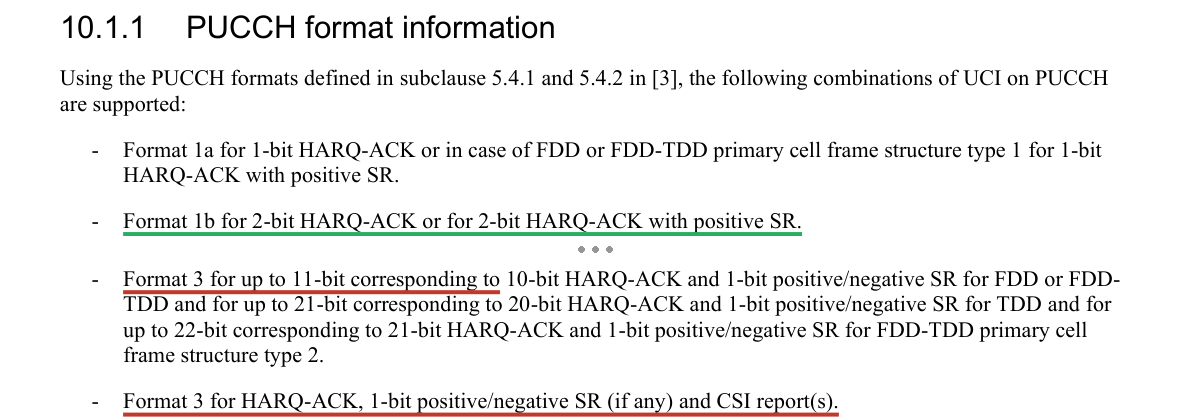
When the SR coincides in time with HARQ-ACK on PUCCH Format 3/4/5, the SR is multiplexed with the HARQ-ACK: PUCCH Format 3/4/5 carries up to 11 bits corresponding to 10-bit HARQ-ACK and a 1-bit positive/negative SR, so the scheduling request bit is transmitted together with the HARQ-ACK. The HARQ-ACK format is read as Format 1b (2-bit HARQ-ACK, with positive SR).

the first serving cell is one of the plurality of candidate serving cells,
The PCell is a member of the configured set of serving cells, which "always consists of one PCell and one or more SCells".

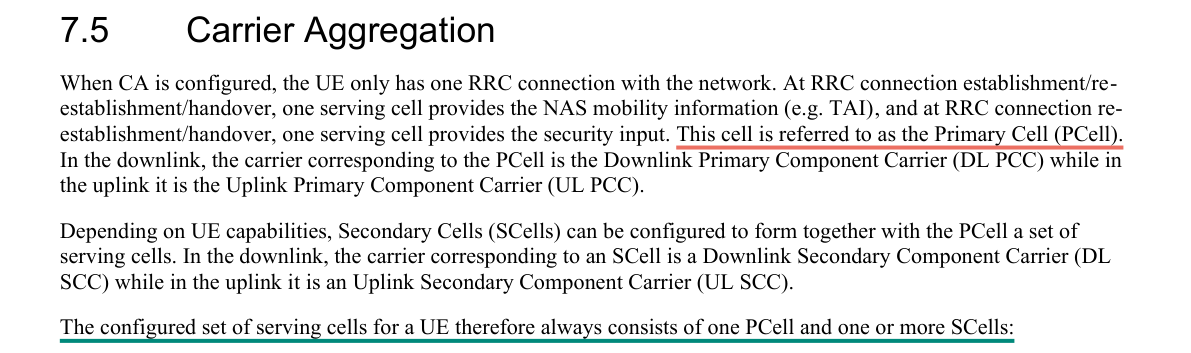
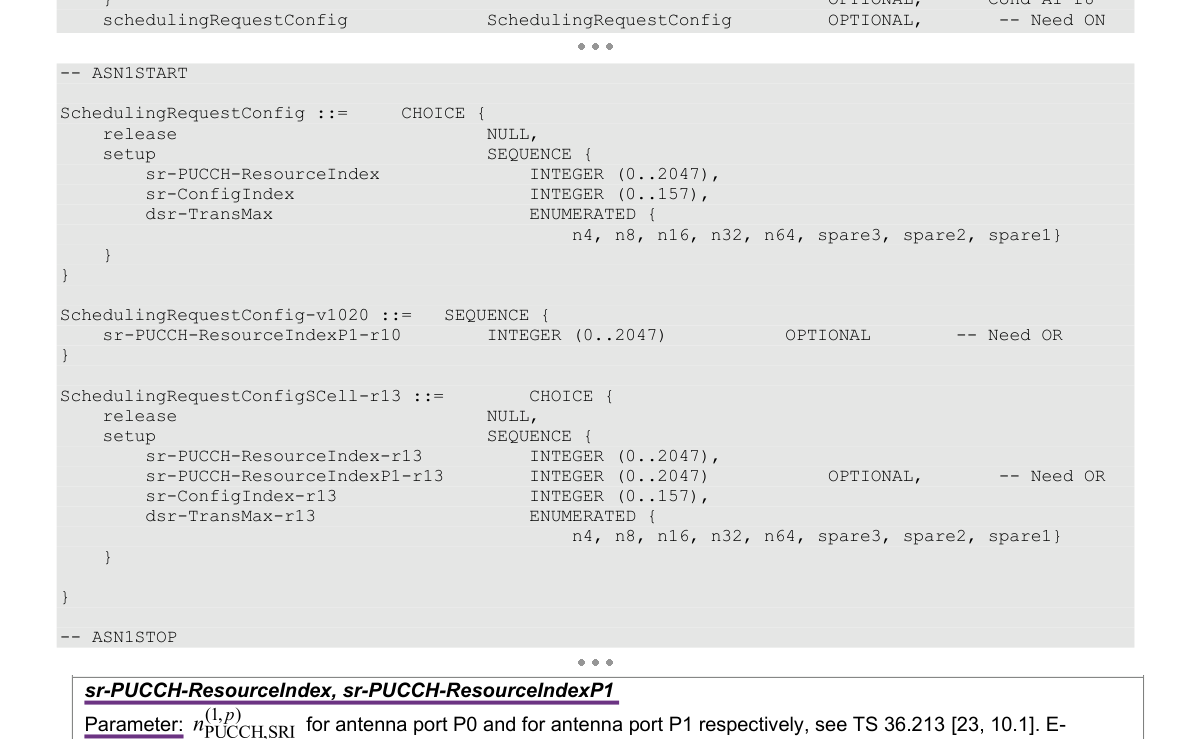
the reserved SR resource is PUCCH resource,
The reserved resource is a PUCCH resource: PUCCH resources for SR are assigned through RRC signalling, and the sr-PUCCH-ResourceIndex parameter of SchedulingRequestConfig sets that resource (sr-PUCCH-ResourceIndex field).

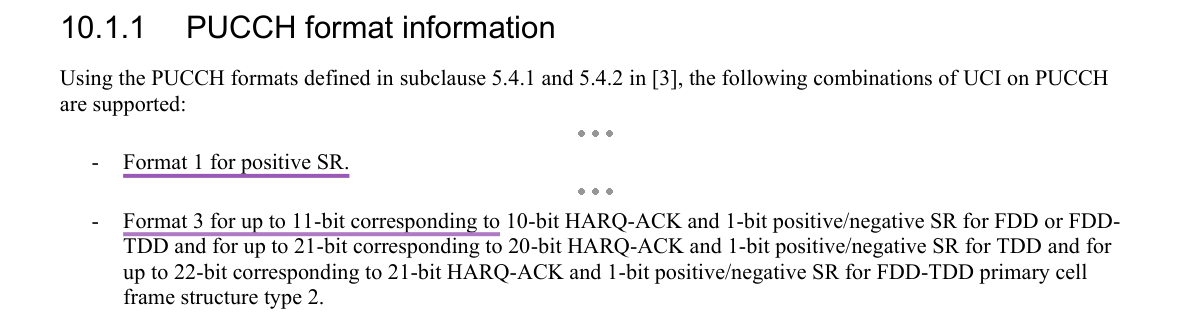
and the SR indication information indicates a positive SR or a negative SR.
The SR is carried as the scheduling request bit (1 = positive SR; 0 = negative SR) appended to the HARQ-ACK bits. A positive SR is what Format 1 carries ("Format 1 for positive SR"), and a negative SR is the other value of the 1-bit positive/negative SR carried with HARQ-ACK on Format 3.

Overall assessment
L1–L9 map to the standard.
References
- TS 36.212 — Evolved Universal Terrestrial Radio Access (E-UTRA); Multiplexing and channel coding
- TS 36.213 — Evolved Universal Terrestrial Radio Access (E-UTRA); Physical layer procedures
- TS 36.300 — Evolved Universal Terrestrial Radio Access (E-UTRA) and Evolved Universal Terrestrial Radio Access Network (E-UTRAN); Overall description; Stage 2
- TS 36.321 — Evolved Universal Terrestrial Radio Access (E-UTRA); Medium Access Control (MAC) protocol specification
- TS 36.331 — Evolved Universal Terrestrial Radio Access (E-UTRA); Radio Resource Control (RRC); Protocol specification
- EP3253144B1 — Pucch methods and apparatuses of enhanced ca in ue and base station (Google Patents)
this document is a technical essentiality assessment prepared for reference, comparing published patent documents against 3GPP standard specifications. It is not a legal determination or legal advice on the essentiality, validity or infringement of the patent. Before any material decision such as licensing or litigation, obtain a review by a qualified patent attorney or attorney at law.
Run it on your own patent
Enter a patent number and get the same chart for your claim. Your first report is free with a company email.
Get started