
EP2299649B1 Claim 1 vs 3GPP TS 24.525: Sample Claim Chart
The content of a report SEPPi generated, shown as delivered. Reports are written in English.
Bibliographic data
- Patent number
- EP2299649B1
- Title
- Providing enterprise services in a service provisioning network
- Inventors
- Pieter Veenstra, Pieter Span, Leendert Brouwer
- Priority date
- 2009-09-18
- Filing date
- 2010-09-16
- Assignee
- Koninklijke KPN NV
- Standard assessed
- IMS business trunking, peering-based (TS 24.525 §5.3.1, §6.2.4.1; TS 23.228 §4.14; TS 24.229 §5.10.3.2) — Any 3GPP Rel-12 compliant IMS network (IBCF, I-CSCF, S-CSCF, application server) serving an enterprise network
- Target release
- Rel-12 (TS 24.525 v12.2.0, TS 24.229 v12.27.0, TS 24.523 v12.2.0, TS 23.228 v12.11.0, TS 22.519 v12.0.0)
Claim 1 (independent)
Method for providing enterprise services in a service provisioning network, the method comprising the steps of: interconnecting an enterprise network (102,104) to said service provisioning network (106) using an interconnect border control network node associated with said service provisioning network; - receiving from said enterprise network an originating service request associated with said enterprise network; assigning said originating service request to a serving network node (120) associated with said originating enterprise network - said service provisioning network acting as an originating service provisioning network and, executing by an application server (128,130) associated with said service provisioning network at least one enterprise service on the basis of said service request.
Standard under assessment
Rel-12 · TS 24.525 v12.2.0 · TS 24.229 v12.27.0 · TS 24.523 v12.2.0 · TS 23.228 v12.11.0 · TS 22.519 v12.0.0
Primary target: IMS business trunking for an enterprise network connected through the IBCF (peering-based business trunking), assessed against Rel-12: TS 24.525 v12.2.0 §5.3.1 and §6.2.4.1 (architecture and handling of requests originating from an NGCN site entering the NGN), supported by TS 24.523 v12.2.0 §8.4.1, TS 22.519 v12.0.0 §3.1, TS 23.228 v12.11.0 §4.14 and TS 24.229 v12.27.0 §5.10.3.2, §5.3.2.1A and §7.2A.6.3.
Release. Rel-12 is the first release in which the business trunking specifications that describe an enterprise network (NGCN) connected through the IBCF with originating business trunking applications exist (TS 24.525, TS 24.523 and TS 22.519 have no earlier version among the specification versions available at the date of analysis). The IBCF's indication that an incoming request is to be handled as an originating request is absent from TS 23.228 §4.14 and TS 24.229 §5.10.3.2 in Rel-9 and present in Rel-10, so every cited mechanism exists together from Rel-12. The wording of the cited clauses is unchanged in the latest release of each specification except TS 23.228 §4.14, where the latest release rewords the entry-point sentence. The ETSI declarations name TS 23.228 and TS 24.229; the declared versions do not decide the release.
Branch assessed. TS 24.525 §6.2.4.1 distinguishes a flow without business trunking applications, where the routeing function only offers originating transit functionality, from a flow in which originating business trunking applications are provided to the NGCN. The claim requires an application server to execute an enterprise service, so the second branch is charted: the IBCF forces the CSCF routeing to treat the NGCN originated request as an originating request, the I-CSCF selects the S-CSCF and an AS is invoked. This branch applies where the NGN and the NGCN have agreed on such applications.
Assessment of the match is a first-stage screening of the published text and not a legal opinion.
Claim chart
Matching colors mark corresponding elements between the claim and the standard. An underline in a screenshot marks the text the mapping rests on.
Method for providing enterprise services in a service provisioning network, the method comprising the steps of:
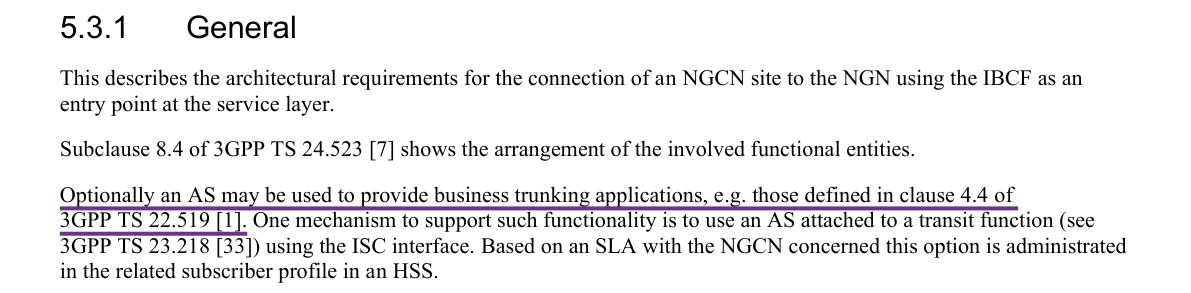
Context. TS 24.525 provides that, depending on the agreements between the NGN and the NGCN, originating business trunking applications are to be provided to the NGCN (§6.2.4.1), an AS optionally providing them (§5.3.1); these are the enterprise services the method provides, within the NGN that supports end users attached to an NGCN and to which an NGCN site is connected using the IBCF as an entry point (TS 24.523 §8.4.1, TS 24.525 §5.3.1).

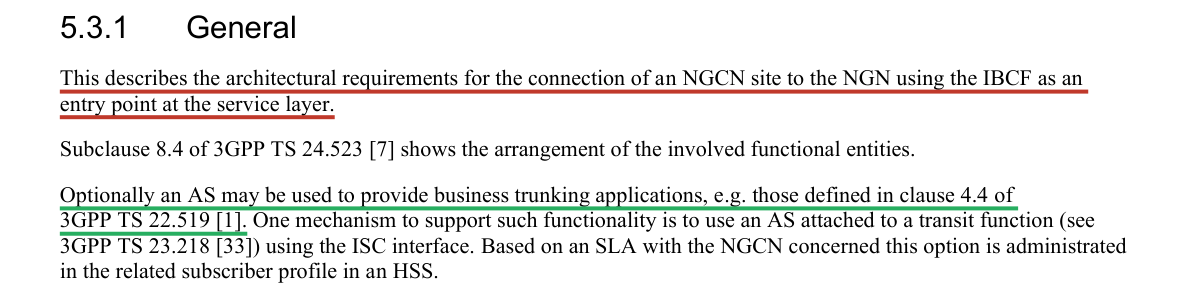

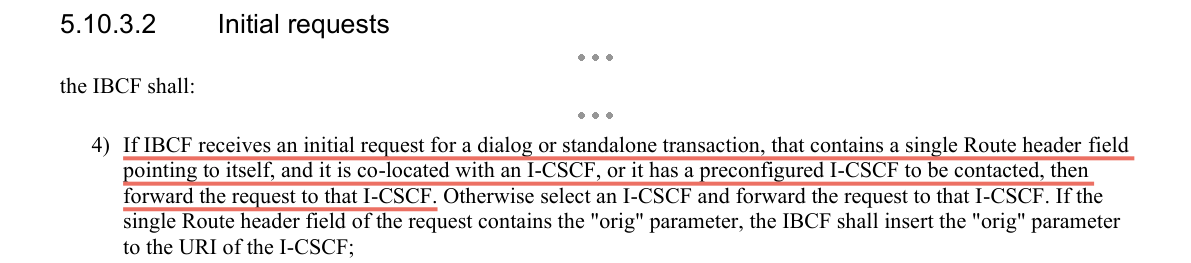
interconnecting an enterprise network (102,104) to said service provisioning network (106) using an interconnect border control network node associated with said service provisioning network;
The connection of an NGCN site (the enterprise side; an NGCN is a self-contained corporate network, TS 22.519 §3.1) to the NGN uses the IBCF as an entry point (TS 24.525 §5.3.1), the NGN being the network that supports end users attached to an NGCN (TS 24.523 §8.4.1); the IBCF acts as an entry point for the IMS network (TS 23.228 §4.14) and, on receiving an initial request, forwards it to the I-CSCF (TS 24.229 §5.10.3.2).




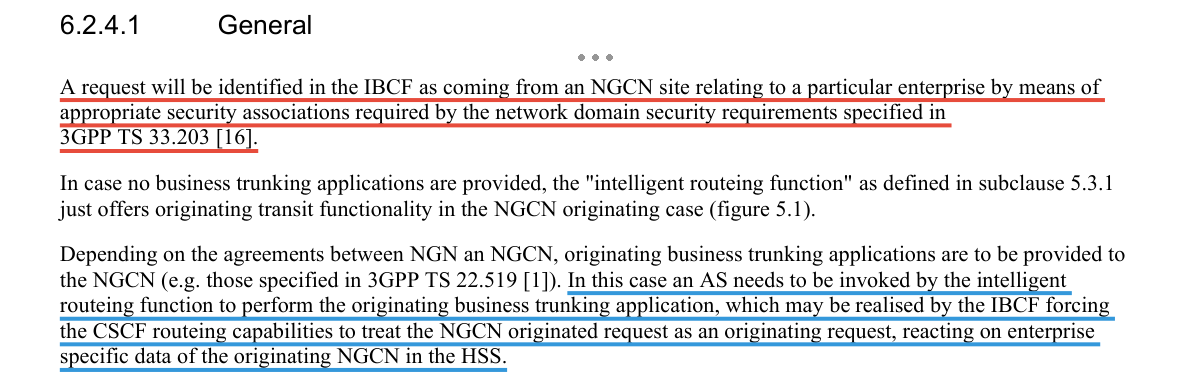
receiving from said enterprise network an originating service request associated with said enterprise network;
The IBCF forces the CSCF routeing capabilities to treat the NGCN originated request as an originating request (TS 24.525 §6.2.4.1), a request identified in the IBCF as coming from an NGCN site relating to a particular enterprise (TS 24.525 §6.2.4.1).
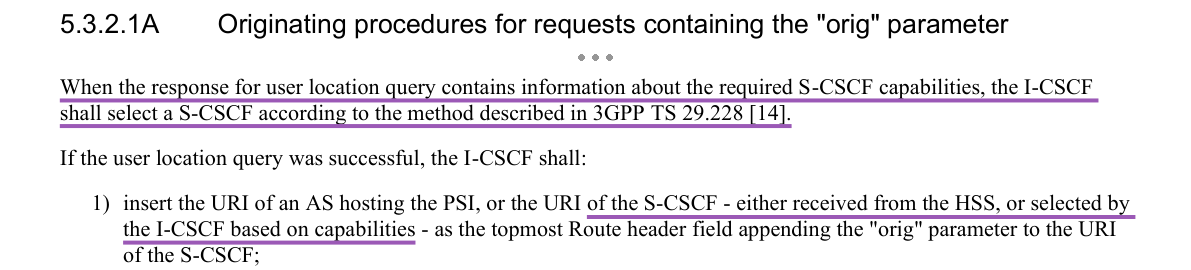
assigning said originating service request to a serving network node (120) associated with said originating enterprise network
The IBCF indicates that the incoming request is to be handled as an originating request by subsequent nodes in the IMS network (TS 23.228 §4.14); the S-CSCF is either received from the HSS or selected by the I-CSCF based on capabilities, the I-CSCF selecting an S-CSCF when the response for the user location query contains information about the required S-CSCF capabilities (TS 24.229 §5.3.2.1A); the S-CSCF runs originating services whenever the orig parameter is present next to its address (TS 24.229 §7.2A.6.3), for an NGCN site to which, depending on the agreements between NGN and NGCN, originating business trunking applications are provided (TS 24.525 §6.2.4.1). The tie between the S-CSCF and the enterprise rests on the HSS query for the served user (TS 24.229 §5.3.2.1A) and on that agreement; no single sentence says the S-CSCF belongs to the enterprise. Optional: this holds where such applications are agreed.



said service provisioning network acting as an originating service provisioning network
The appending of the orig parameter enables an IM CN subsystem, the NGN, to perform originating services to the network that originated the initial request (TS 24.229 §5.10.3.2); the orig parameter is appended to the address of the S-CSCF or I-CSCF by an IBCF acting as entry point if the network is performing originating service to another network, and the S-CSCF runs originating services whenever it is present (TS 24.229 §7.2A.6.3).


executing by an application server (128,130) associated with said service provisioning network at least one enterprise service on the basis of said service request.
An AS is invoked by the intelligent routeing function to perform the originating business trunking applications, the IBCF forcing the CSCF routeing capabilities to treat the NGCN originated request as an originating request (TS 24.525 §6.2.4.1); an application server (AS) may be used to provide business trunking applications (TS 24.525 §5.3.1) of the NGN (TS 24.523 §8.4.1), on receipt of the originating request from an NGCN (TS 24.525 §6.2.6.2.1). Optional: the AS is used where the NGN and the NGCN have agreed on business trunking applications (TS 24.525 §6.2.4.1, §5.3.1).



Overall assessment
L1–L5 map to the standard, on the branch of TS 24.525 §6.2.4.1 in which originating business trunking applications are provided to the NGCN.
References
- TS 24.525 — Business trunking; Architecture and functional description
- TS 24.523 — Core and enterprise Next Generation Network (NGN) interaction scenarios; Architecture and functional description
- TS 22.519 — Business Communication Requirements
- TS 23.228 — IP Multimedia Subsystem (IMS); Stage 2
- TS 24.229 — IP multimedia call control protocol based on Session Initiation Protocol (SIP) and Session Description Protocol (SDP); Stage 3
- EP2299649B1 — Providing enterprise services in a service provisioning network (Google Patents)
this document is a technical essentiality assessment prepared for reference, comparing published patent documents against 3GPP standard specifications. It is not a legal determination or legal advice on the essentiality, validity or infringement of the patent. Before any material decision such as licensing or litigation, obtain a review by a qualified patent attorney or attorney at law.
Run it on your own patent
Enter a patent number and get the same chart for your claim. Your first report is free with a company email.
Get started